
Last month Matt showed us what eight months of heavy Claude adoption looks like at Gymdesk: the MCP server, the specs, the triage packets, the bots, and the 2,385 pull requests. He also showed us the part nobody warns you about: the silos, the lost stopping points, and a team that can be overwhelmed by its own output.
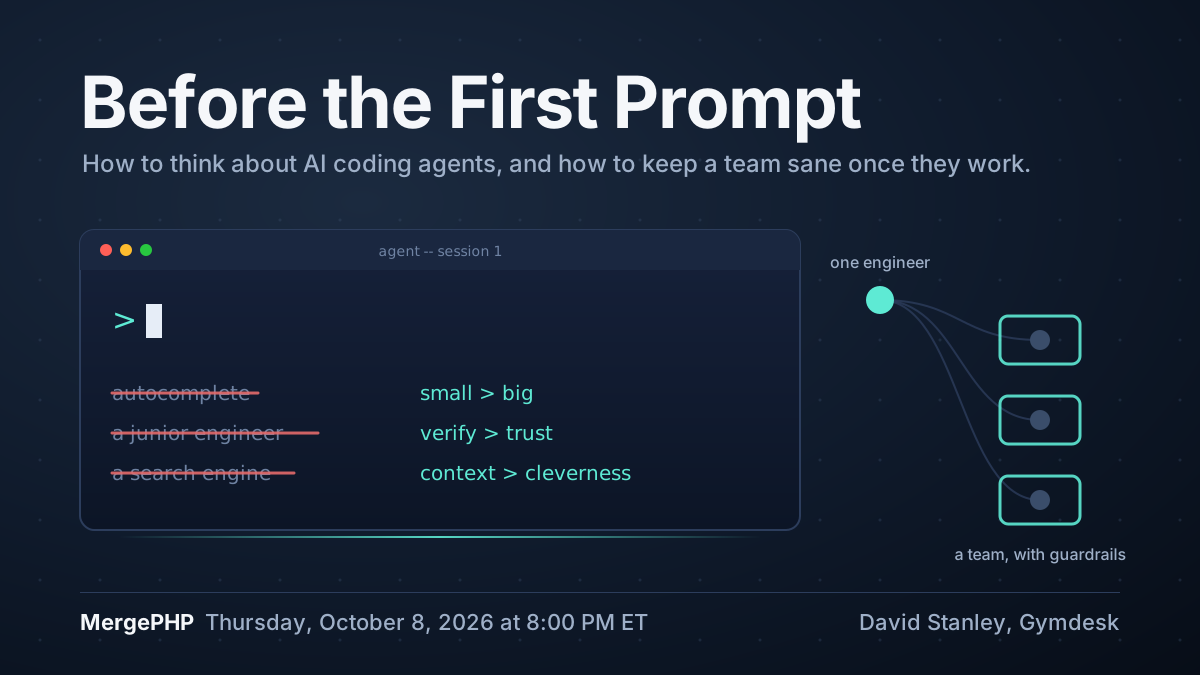
There is no shortage of content on what AI coding agents can do. Almost all of it is filmed on a toy project or a clean greenfield codebase with no technical debt. There is very little on how to think about agents before you type your first prompt into a legacy, brownfield application, and even less on how to keep a team sane once they work. We will cover the mental models that hold up (an agent is not autocomplete, not a junior engineer, and not a search engine), what an agent needs from a codebase and why it is the same list your team always needed, the small set of habits that separate a good first week from a frustrating one, and the progression from one engineer experimenting to a team shipping with guardrails. Then we will answer Matt's closing questions from the engineering leadership side: which gates we put in place, what we measure, and how to say "not faster" when the numbers make everyone want to go faster.
You will leave with a starting point, not a feature list.